Sleep Consistency Beats Sleep Duration (Here's the Science)
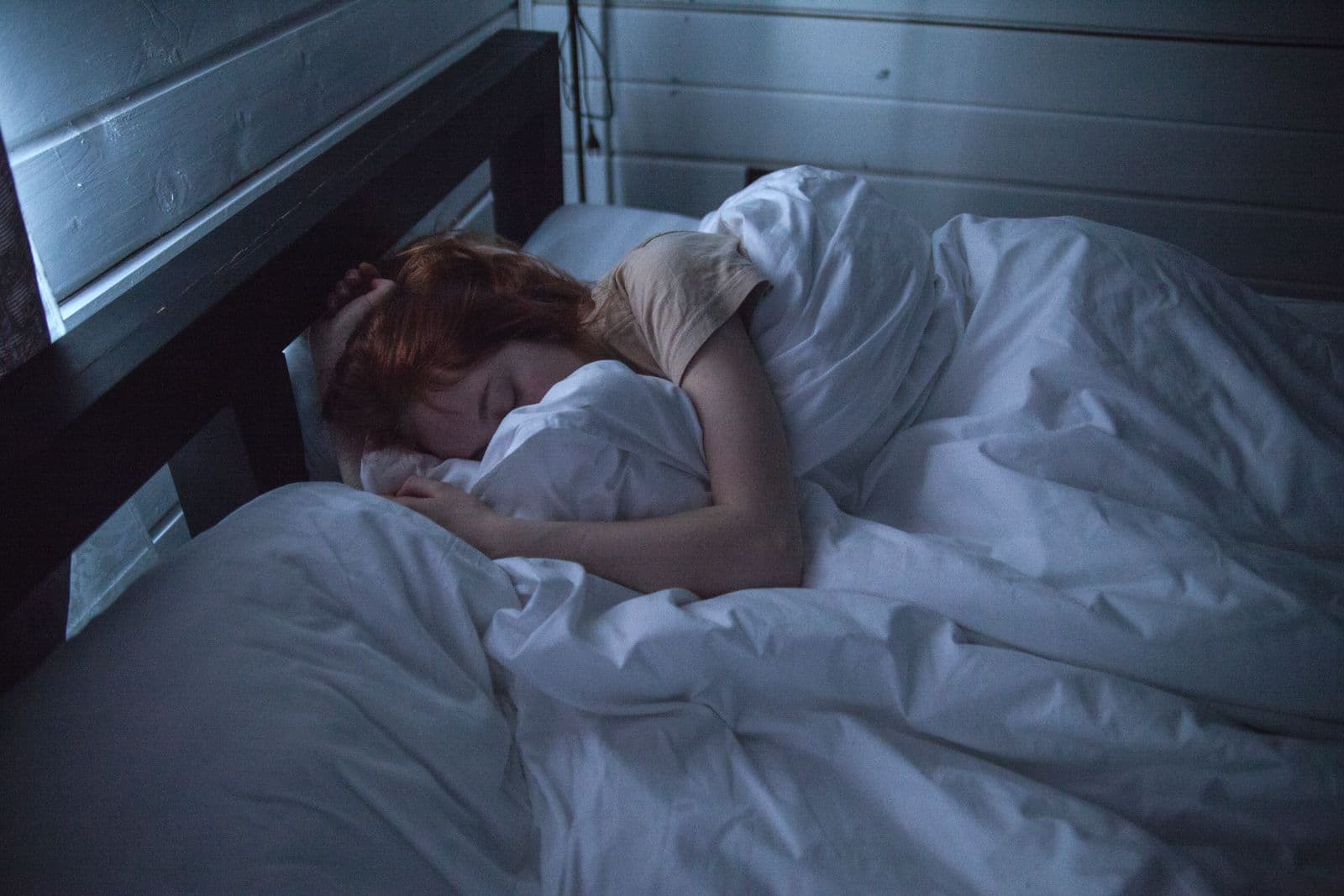
You've heard the gospel: get seven to nine hours. So you grind through a short week, then sleep until noon on Saturday and call it recovery.
Here's the plot twist the hour-counting crowd misses. In big studies with wrist sensors, how steady your sleep–wake timing is often predicts health outcomes as well as—or better than—how many hours you average [1][2]. Same bedtime. Same wake time. Boring? Maybe. Powerful? The data says yes.
Let's unpack what sleep consistency actually means, where weekend catch-up helps (and where it backfires), and how to turn a schedule into a habit you can stick with.
First, a 30-second sleep-consistency refresher
Sleep duration is the total time you sleep (or spend in bed aiming to sleep). Sleep consistency—also called sleep regularity—is how similar your sleep and wake times are from one day to the next [1][3].
Researchers quantify that with metrics like the Sleep Regularity Index (SRI): roughly, the chance you're in the same state (asleep or awake) at the same clock time 24 hours later. Perfect regularity scores near 100; random patterns score near 0 [1][2]. Other studies simply look at the night-to-night standard deviation of sleep duration or bedtime [3].
Why does timing matter so much? Your body runs on circadian clocks that expect a stable light–dark and sleep–wake cycle. When bed and wake times bounce around, those clocks get mixed signals—similar in spirit to jet lag, even if you never leave your zip code [4][5].
Public-health guidance already nods this way. The CDC and the American Academy of Sleep Medicine both recommend going to bed and waking up around the same time every day, including weekends [6][7]. Adults still need enough sleep—generally 7 or more hours for most healthy adults [6]—but quantity and consistency are partners, not rivals.
What the big studies actually found
Consistency and mortality
Two landmark UK Biobank analyses used wearable accelerometers on tens of thousands of adults.
In one 2024 SLEEP study, researchers calculated SRI scores from more than 10 million hours of data in about 61,000 people [1]. Compared with the least regular quintile, people in the more regular groups had roughly 20%–48% lower risk of all-cause mortality, plus lower risks of cancer and cardiometabolic death, after adjusting for age, sex, lifestyle, and health factors [1]. When the team compared models head-to-head, sleep regularity was a stronger predictor of all-cause mortality than sleep duration—and adding duration on top of regularity didn't meaningfully improve the fit [1].
A related eLife analysis in nearly 89,000 UK Biobank participants found a nonlinear pattern: people with very irregular sleep (around the 5th percentile of SRI) had about 1.5× the all-cause mortality hazard relative to the median, with similar signals for cardiovascular and cancer mortality [2]. Associations held after accounting for sleep duration and fragmentation in sensitivity analyses [2].
Caveat, said clearly: these are observational links. Irregular sleep may mark illness as well as contribute to it. Still, the signal is large, objective, and consistent across cohorts [1][2].
Consistency and your heart (and metabolism)
In the Multi-Ethnic Study of Atherosclerosis (MESA), nearly 2,000 adults wore actigraphy for a week and were followed for about five years [3]. People with the most irregular sleep duration (day-to-day SD over 120 minutes) had more than double the risk of incident cardiovascular events versus those with the most regular patterns—even after adjusting for traditional CVD risk factors and average sleep duration, apnea, insomnia symptoms, and chronotype [3]. Highly irregular sleep-onset timing (SD over 90 minutes) showed a similar ~2× risk [3].
That lines up with broader reviews: later and more variable sleep timing tracks with worse cardiometabolic markers, while earlier, steadier schedules look healthier [8].
Social jetlag: the weekday–weekend mismatch
Social jetlag is the gap between your biological preferred timing and the schedule social life demands—classically, earlier/shorter sleep on workdays and later/longer sleep on free days [4][5]. Reviews estimate that a large share of working adults in industrialized countries live with at least an hour of it [4].
It's linked—again, mostly observationally—to less healthy eating patterns, higher BMI in several cohorts, and worse metabolic profiles [4][5]. Think of it as chronic mini jet lag without the vacation photos.
The weekend catch-up myth (and the narrow exception)
"I'll sleep it off on Saturday" feels righteous. Lab science is less impressed when short sleep is recurring.
In a carefully controlled University of Colorado study published in Current Biology, healthy adults either slept normally, restricted sleep to about 5 hours for many nights, or restricted sleep during a simulated workweek, slept ad lib on a "weekend," then went back to short sleep [9]. Weekend recovery did not prevent the metabolic hit. People in the weekend-recovery arm still gained weight, delayed their circadian timing, and saw whole-body insulin sensitivity fall—about 27% after the return to short sleep, versus ~13% with continuous restriction [9]. NIH's write-up of the work put it bluntly: weekend catch-up didn't reverse the damage and, on some metabolic measures, looked worse [10].
So what doesn't work as a full fix:
- Sleeping until noon every weekend while living on 5–6 hours all week
- Treating two long nights as repayment for five short ones
- Assuming "more hours somewhere" cancels circadian whiplash
What might help in real life (with nuance): if your weekdays are chronically short, a modest catch-up of roughly 1–2 hours can be better than nothing for some metabolic markers in observational data—while large weekend overshoots often look like social jetlag and can track with worse glucose-related measures [8]. The cleanest strategy is still the boring one: protect weekday sleep and keep weekend timing close to weekday timing [6][7][9].
What works: practical consistency without becoming a monk
You don't need a perfect SRI of 100. In the SLEEP mortality study, people in the top regularity group tended to keep sleep and wake within roughly one-hour windows most days; the least regular group wandered across roughly three-hour windows [1]. That's a usable target.
Try this playbook:
- Pick a wake time you can hit 7 days a week—then set bedtime by counting backward to land near 7–9 hours in bed [6][7].
- Cap weekend drift. Aim to wake within about an hour of your weekday time. If you need catch-up, prefer an earlier bedtime Friday/Saturday over a late sleep-in [7][9].
- Anchor with light. Morning outdoor light helps lock the clock; dim evenings and fewer late screens help too [4][6].
- Protect the wind-down. A short, repeatable pre-sleep routine beats heroic willpower at midnight [6][7].
- Track the habit, not just the hours. A calendar streak of "same wake window" is often more actionable than obsessing over nightly totals.
Shift workers, caregivers, and people with clinical sleep disorders face real constraints—this is general education, not a prescription. If you regularly can't fall or stay asleep, talk to a clinician [6].
Our take
- Duration still matters. Most adults need ~7+ hours; short sleep is not a flex [6].
- Consistency punches above its weight. Large accelerometer studies link irregular timing to higher mortality and CVD risk, sometimes more strongly than average duration [1][2][3].
- Weekend marathons aren't a full refund. Experimental recovery sleep after repeated short nights failed to protect metabolism when restriction resumed [9][10].
- Social jetlag is common and costly. Shrinking the weekday–weekend midpoint gap is a high-leverage move [4][5].
- Start with the wake time. Lock that, then defend bedtime—it's the habit that makes the hours possible.
How Goald AI fits in
Sleep schedules fail the same way diets fail: not from ignorance, from inconsistency when life gets loud.
Goald AI is built for that problem. Treat "wake at 6:45" or "lights out by 10:30" as a habit next to your training and nutrition goals. Track the streak. Let your AI Mentor adjust when travel or late meetings smash the plan—instead of quietly abandoning the schedule for three weeks.
Goald AI is coming to iOS soon. Free covers up to 3 goals; Pro is $9.99/month or $99.99/year, with goals, habits, fitness tracking, smart scheduling, and an AI Mentor that remembers your history. Join the waitlist.
Not medical advice. This article is for general education only. Talk to your doctor about sleep problems, excessive daytime sleepiness, suspected sleep apnea, or before changing sleep routines if you have a medical condition, take medication, are pregnant, or are under 18.
Sources
- Windred DP, et al. "Sleep regularity is a stronger predictor of mortality risk than sleep duration: A prospective cohort study." SLEEP, 2024. https://pmc.ncbi.nlm.nih.gov/articles/PMC10782501/
- Cribb L, et al. "Sleep regularity and mortality: a prospective analysis in the UK Biobank." eLife, 2023. https://pmc.ncbi.nlm.nih.gov/articles/PMC10666928/
- Huang T, Mariani S, Redline S. "Sleep Irregularity and Risk of Cardiovascular Events: The Multi-Ethnic Study of Atherosclerosis." Journal of the American College of Cardiology, 2020. https://pmc.ncbi.nlm.nih.gov/articles/PMC7237955/
- Caliandro R, et al. "Social Jetlag and Related Risks for Human Health: A Timely Review." Nutrients, 2021. https://www.mdpi.com/2072-6643/13/12/4543
- Wittmann M, Dinich J, Merrow M, Roenneberg T. "Social jetlag: misalignment of biological and social time." Chronobiology International, 2006. https://pubmed.ncbi.nlm.nih.gov/16687322/
- Centers for Disease Control and Prevention. "About Sleep." CDC, accessed 2026. https://www.cdc.gov/sleep/about/index.html
- American Academy of Sleep Medicine. "Healthy Sleep Habits." SleepEducation.org, updated 2020. https://sleepeducation.org/healthy-sleep/healthy-sleep-habits/
- Chaput J-P, et al. "Sleep timing, sleep consistency, and health in adults: a systematic review." Applied Physiology, Nutrition, and Metabolism, 2020. https://cdnsciencepub.com/doi/10.1139/apnm-2020-0032
- Depner CM, et al. "Ad libitum Weekend Recovery Sleep Fails to Prevent Metabolic Dysregulation during a Repeating Pattern of Insufficient Sleep and Weekend Recovery Sleep." Current Biology, 2019. https://pmc.ncbi.nlm.nih.gov/articles/PMC12798825/
- NIH Research Matters. "Weekend catch-up can't counter chronic sleep deprivation." National Institutes of Health, 2019. https://www.nih.gov/news-events/nih-research-matters/weekend-catch-cant-counter-chronic-sleep-deprivation
Goald AI is coming to iOS.
Join the waitlist — be first in when we launch.
Related posts
fitness
Creatine for Your Brain? What the Science Actually Says
Creatine is having a moment as a brain supplement. Here's what the research really shows, where the hype runs ahead of the data, and who might benefit most.
habits
Habits vs Goals — Why You Need Both
Goals give you direction. Habits give you the engine. Here's why treating them separately is one of the biggest mistakes in personal productivity.
goals
The Right Way to Set Goals (And Why Most People Get It Wrong)
Most goal-setting advice focuses on what to aim for. The real problem is structure — here's how to build goals that actually convert into action.