Exercise Snacks: A Workout Hidden in Your Workday
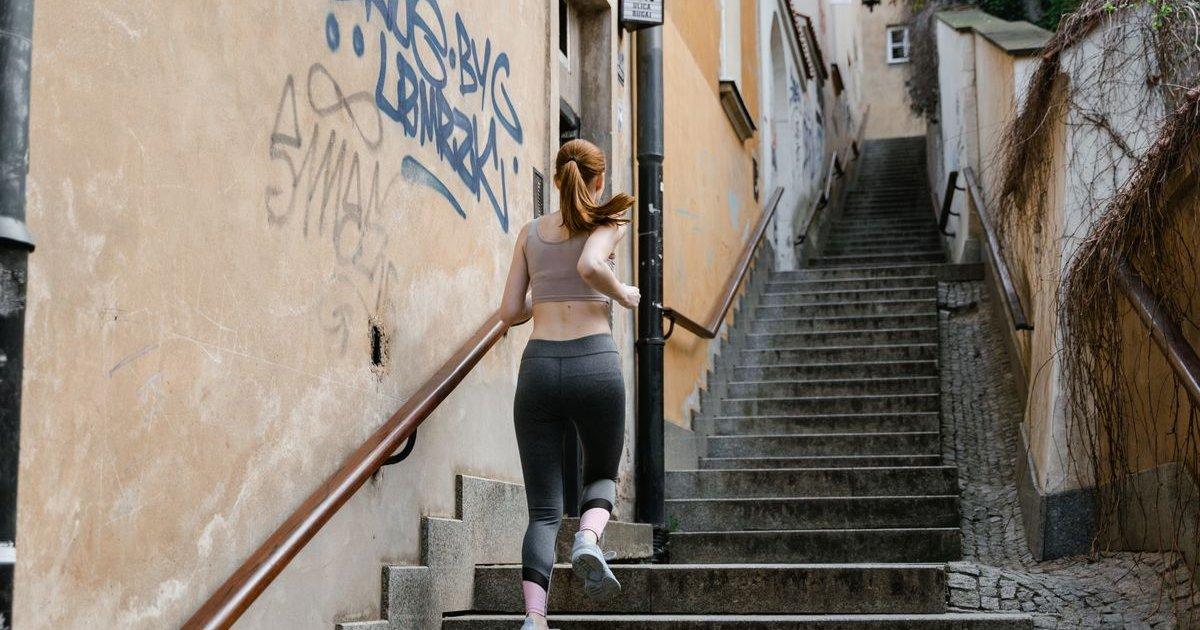
You know the feeling. It's 3 p.m., your back aches from sitting, you haven't moved in hours, and the gym feels like a distant planet. Good news: new research suggests you don't need a gym—or even a full workout—to unlock real health benefits. Enter exercise snacks: brief, vigorous bursts of movement you can sprinkle through your workday like punctuation marks.
The premise is simple. Instead of carving out 45 minutes you'll never find, you take advantage of moments that already exist—between meetings, after lunch, during a coffee break—and turn them into tiny doses of effort. The science says those doses add up in surprising ways.
Let's walk through an ordinary workday, stop by stop, and see where the snacks fit in.
8:00 a.m. — Coffee's brewing. Take the stairs.
You just arrived. The elevator is right there. But so are the stairs.
The research: Exercise scientists Emmanuel Stamatakis, Matthew Ahmadi, and colleagues at the University of Sydney have spent years tracking what they call vigorous intermittent lifestyle physical activity, or VILPA—brief bursts of intense movement embedded into daily life rather than done as formal exercise. In a 2022 study published in Nature Medicine, Stamatakis and team analyzed wearable accelerometer data from 25,241 UK Biobank participants who reported doing no leisure-time exercise [1]. Over about seven years, those who accumulated a median of just 3–4 minutes of VILPA daily—often in bouts as short as one or two minutes—had 38–40% lower all-cause mortality risk and 48–49% lower cardiovascular mortality risk compared with those who did none [1].
The snack: Climbing three flights of stairs vigorously—hard enough that you're breathing heavily—takes less than two minutes. That's VILPA. Do it once in the morning, and you've already made a dent.
10:30 a.m. — Meeting ends. Stair sprint #2.
You just sat through an hour of budget projections. Your body is screaming for movement.
The research: Stair climbing specifically has solid evidence behind it. In 2017, Mary Allison and colleagues at McMaster University (including Martin Gibala, a pioneer in high-intensity interval training research) found that sedentary women who did just three 20-second "all-out" stair climbs, three times a week for six weeks, improved their cardiorespiratory fitness by 12% [2]. A follow-up study by Emma Jenkins and the same McMaster team in 2019 tested a more spaced-out "snack" model: three 60-second stair climbs per day, separated by 1–4 hours, three days a week for six weeks. Peak oxygen uptake rose about 5%, and cycling peak power improved 12% [3]. The gains were more modest than back-to-back intervals, but the protocol was easy to fit into a real day.
The snack: After any meeting, take the stairs—fast. Three flights, one minute. Your heart rate spikes, you catch your breath, and you return to your desk sharper than you left.

1:00 p.m. — Post-lunch slump incoming. Walk it off.
You just ate. Your blood sugar is climbing, and so is the urge to nap.
The research: A 2022 meta-analysis in Sports Medicine by Aidan Buffey and colleagues at the University of Limerick pooled seven randomized crossover trials on breaking up prolonged sitting with short activity breaks [4]. Compared to uninterrupted sitting, light-intensity walking breaks (typically 2–5 minutes every 20–30 minutes) reduced postprandial glucose by about 17% and insulin by a similar margin [4]. Standing helped too, but walking was clearly superior. The mechanism is straightforward: contracting leg muscles act like pumps that help clear glucose from your blood.
The snack: After lunch, take a 5-minute brisk walk—around the block, through the parking lot, up and down the hall. It doesn't need to be intense. The point is to interrupt the sitting and give your metabolic machinery a nudge before the glucose spike sets in.
3:30 p.m. — The afternoon wall. Time for the hardest snack.
This is prime slump territory. Energy craters, focus scatters, and the vending machine starts calling.
The research: In a 2022 review in Exercise and Sport Sciences Reviews, Hashim Islam, Martin Gibala, and Jonathan Little formally defined exercise snacks as isolated bouts of vigorous exercise lasting one minute or less, performed several times throughout the day [5]. They argue that this approach can improve cardiorespiratory fitness, reduce sedentary behavior, and offset the metabolic harms of prolonged sitting—all without a gym membership or a single pair of running shoes [5]. The key word is vigorous: you need to push hard enough that holding a conversation becomes difficult.
The snack: Find stairs, a hill, or even a hallway where you can do 20 seconds of brisk walking lunges or high knees. Do three rounds with a minute of rest in between. Total time: under five minutes. You'll feel the difference.
6:00 p.m. — Commute home. One more burst.
Your workday is ending, but one final snack can cap the day.
The research: The VILPA data from Stamatakis and colleagues has another striking finding. In a 2023 study published in JAMA Oncology, the same team looked at cancer incidence among 22,398 UK Biobank non-exercisers over about 6.7 years [6]. Compared with no VILPA, a median of 4.5 minutes per day was associated with 20% lower total cancer risk and 31% lower risk of cancers linked to physical inactivity, such as breast and colon cancer [6]. A 2024 study by Ahmadi, Stamatakis, and collaborators in British Journal of Sports Medicine found that women who accumulated just 3.4 minutes of daily VILPA had 45% lower risk of major cardiovascular events and 67% lower risk of heart failure [7]. The associations in men were weaker and less consistent, which the authors say warrants further study.
The snack: On your way out, skip the elevator one last time. Or if you take transit, get off a stop early and walk briskly. One to two minutes of vigorous effort—rushing up a subway stairwell, power-walking to your car—counts.
Exercise snacks in context: what we know and what we don't
Before you treat stair sprints as a cure-all, a few important caveats.
It's observational data. The UK Biobank studies are large and carefully controlled for confounders, but they can't prove causation. People who naturally move more vigorously may differ in other ways—genetics, overall health, lifestyle—that also reduce mortality risk. The wearable-based VILPA measure is a step up from self-reported exercise, but it's still a snapshot from one week of accelerometer wear.
The intervention trials are small. The stair-climbing studies from McMaster involved 12–31 participants each. They're proof-of-concept work, not large-scale clinical trials. The effects on long-term health outcomes like heart disease or cancer haven't been tested directly—only inferred from fitness and metabolic improvements.
Short workouts aren't a full replacement. The World Health Organization's 2020 guidelines emphasize that "every move counts" and that any physical activity is better than none [8]. But they still recommend 150–300 minutes of moderate activity (or 75–150 minutes of vigorous activity) per week, plus muscle-strengthening on two or more days. Exercise snacks are a valuable addition, not a substitute for regular training if you can manage it.
Talk to your doctor. If you have a heart condition, uncontrolled blood pressure, joint problems, or other health concerns, check with a clinician before adding vigorous bursts to your day. The studies typically excluded people with major health issues.
The exercise snacks menu
Here's a quick-reference card for your workday.
| Snack | Duration | Where | What the evidence shows |
|---|---|---|---|
| Stair sprint | 1–2 min | Office stairwell | 12% VO₂ improvement over 6 weeks (Allison et al.) [2] |
| Spaced stair climbs | 3 × 60 sec, spread out | Any stairwell | 5% VO₂, 12% power improvement (Jenkins et al.) [3] |
| Post-meal walk | 5 min | Around the building | 17% lower postprandial glucose (Buffey et al.) [4] |
| High-knees or lunges | 3 × 20 sec | Hallway, empty room | Clears metabolic "cobwebs," boosts alertness [5] |
| Brisk commute walk | 1–2 min | Parking lot, transit stop | Associated with lower mortality, cancer, CVD risk [1][6][7] |
How Goald AI fits in
The hardest part of exercise snacks isn't the effort—it's remembering to do them. That's where a system helps.
Goald AI connects your goals, habits, and fitness tracking in one place. Its AI Mentor learns your schedule and can nudge you when gaps appear—between meetings, after lunch, before you leave for the day. If you set a goal to move more without formal gym time, Goald AI can slot reminders for stair climbs or walks right into your calendar. It tracks the streaks so you can see the pattern building.
Goald AI is coming to iOS soon. Free for up to 3 goals; Pro is $9.99/month or $99.99/year. Join the waitlist.
The bottom line on exercise snacks
You don't need an hour at the gym to move the needle. A few minutes of vigorous effort—stair climbing, brisk walking, anything that gets your heart pounding—scattered through your workday may reduce mortality risk, lower cancer incidence, improve cardiovascular health, and keep your blood sugar in check. The research is promising, the barriers are low, and the science keeps getting stronger.
Start small. Take the stairs once tomorrow. Add a post-lunch walk next week. Before long, you'll have a handful of snacks baked into your day—no gym bag required.
For more on building habits that stick, check out our guide. And if you're curious about how short breaks affect your focus, we ran a 5-day experiment on that too. For the science of training at lower intensities, see our deep dive on Zone 2 training.
This article is for general education only and is not medical advice. Consult a healthcare provider before starting any new exercise program, especially if you have heart disease, high blood pressure, or other health conditions.
Sources
- Stamatakis E, Ahmadi MN, Gill JMR, et al. "Association of wearable device-measured vigorous intermittent lifestyle physical activity with mortality." Nature Medicine, 2022. https://www.nature.com/articles/s41591-022-02100-x
- Allison MK, Baglole JH, Martin BJ, et al. "Brief Intense Stair Climbing Improves Cardiorespiratory Fitness." Medicine & Science in Sports & Exercise, 2017. https://pubmed.ncbi.nlm.nih.gov/28009784/
- Jenkins EM, Nairn LN, Skelly LE, et al. "Do stair climbing exercise 'snacks' improve cardiorespiratory fitness?" Applied Physiology, Nutrition, and Metabolism, 2019. https://pubmed.ncbi.nlm.nih.gov/30649897/
- Buffey AJ, Herring MP, Langley CK, et al. "The Acute Effects of Interrupting Prolonged Sitting Time in Adults with Standing and Light-Intensity Walking on Biomarkers of Cardiometabolic Health in Adults: A Systematic Review and Meta-analysis." Sports Medicine, 2022. https://pmc.ncbi.nlm.nih.gov/articles/PMC9325803/
- Islam H, Gibala MJ, Little JP. "Exercise Snacks: A Novel Strategy to Improve Cardiometabolic Health." Exercise and Sport Sciences Reviews, 2022. https://pubmed.ncbi.nlm.nih.gov/34669625/
- Stamatakis E, Ahmadi MN, Friedenreich CM, et al. "Vigorous Intermittent Lifestyle Physical Activity and Cancer Incidence Among Nonexercising Adults: The UK Biobank Accelerometry Study." JAMA Oncology, 2023. https://jamanetwork.com/journals/jamaoncology/fullarticle/2807734
- Ahmadi MN, Stamatakis E, et al. "Device-measured vigorous intermittent lifestyle physical activity (VILPA) and major adverse cardiovascular events: evidence of sex differences." British Journal of Sports Medicine, 2024. https://bjsm.bmj.com/content/59/5/316
- World Health Organization. "WHO Guidelines on physical activity and sedentary behaviour." 2020. https://www.who.int/publications/i/item/9789240015128
Goald AI is coming to iOS.
Join the waitlist — be first in when we launch.
Related posts
fitness
We Graded the AI Personal Trainer. Here's the Report Card
Can an AI workout plan replace your trainer? Researchers graded ChatGPT on safety, accuracy, and more. The results are surprisingly mixed—here's the card.
fitness
Biological Age Tests: What Works and What Doesn't
Is that biological age test worth it? Here's what research says about epigenetic clocks, test variability, and what actually moves the needle on aging.
fitness
Time-Restricted Eating: What Works and What Doesn't
Time-restricted eating is trending hard. Here's what trials say works (modest glycemic help), what doesn't (ultra-short windows), and a simple protocol.